

OUR MISSION
TO (IN)FORM A MOVEMENT OF FAVELA ORGANIZERS REALIZING A JUST AND SUSTAINABLE URBAN FUTURE.

Global Climate March at COP30 in Belém, Brazil in 2025: Sustainable Favela Network members presented our Climate Justice Letter to global authorities.
We amplify community voices, strengthen grassroots leadership, and connect local initiatives with knowledge, resources and networks they need to thrive—often from one another.
Through communication, collaboration, capacity-building and advocacy, we challenge inequality, confront stigma, defend human rights and advance community-led solutions to social, environmental and economic challenges.
We believe that favelas are critical centers of ancestral innovation, knowledge, culture and resilience—and that their residents must be recognized not as beneficiaries of development, but as its protagonists and leaders.
Our work is rooted in solidarity, social justice and the conviction that lasting change begins with communities themselves.
PILLARS OF CHANGE
Explore our three key areas of grassroots action:


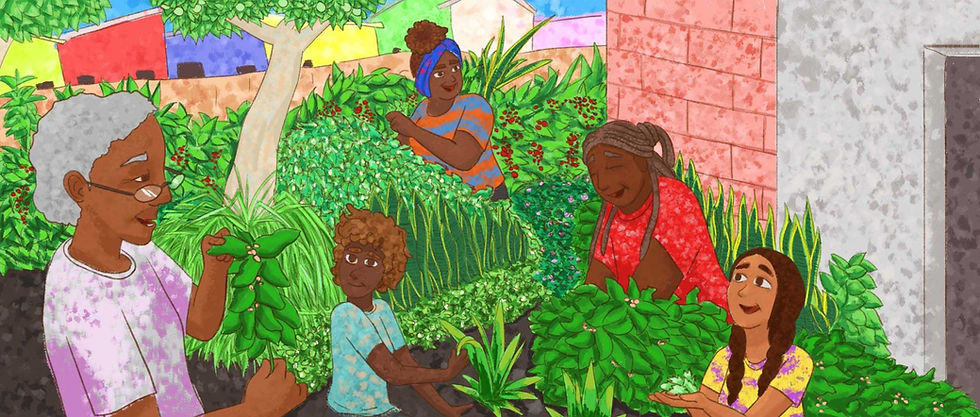


RioOnWatch is the world's longest-running, bilingual favela journalism platform. Since 2010 we've published over 2,500 articles offering diverse and nuanced, in-depth perspectives from favela residents, from human rights violations to community solutions. We frequently launch new debates and promote the "Right to the Favela." Reporting is done by a network of 100+ favela and popular communicators and journalists, as well as solidarity reporters. Articles are translated by volunteers. Regular themes include: Right to Housing, Climate Justice, Human Rights, Democracy, Anti-racism, Favela Memories and Grassroots Communication.
The Sustainable Favela Network is a grassroots network of over 1200 community organizers and technical allies across 400 favelas in Greater Rio de Janeiro and beyond. By centering local, socio-environmental organizers and solutions, the network works across 12 thematic objectives and six pillars of action to realize the potential of favelas as sustainable communities. We work by sharing knowledge across our grassroots members while also building large actions together. These range from collective actions to citizen data collection, NbS infrastructure build-outs to domestic and global advocacy, training courses to festivals.
The Favela Community Land Trust Project is responsible for introducing community land trusts into the public debate in Brazil. Recognizing the tool's potential to address diverse threats related to the right to housing—by enabling community-building, ensuring land rights, and doing so to guarantee permanent affordability (in trust)—we began a long process of mobilization, dissemination and advocacy in 2018. Today, CLTs are widely discussed among Brazil’s urban and housing professionals, five cities recommend CLT formally in their Master Plans, and we are working alongside diverse partners to implement Brazil’s first CLT.
COMMUNITY VOICES

Community leaders on the balcony of CatComm's community organizing hub in 2003. The technology center for grassroots leaders was recognized by UN Habitat as one of 70 global 'Actionable Ideas,'

“The Sustainable Favela Network is always helping to empower us. We have each other [in the SFN], and it’s a wonderful thing that the favela has us! Because, regardless of the difficulties, regardless of everything we go through, we don’t give up. We [community organizers] are still here!”
— Verônica Gomes, Irmãos Kennedy Community Center (Vila Kennedy)

"The Community Land Trust is of paramount importance. It brings [tenure] security and hope. I can’t wait for it to be implemented and hope it continues to grow, because it ensures we can remain on our land, preserve our histories, maintain our territory and sustain our community."
— Maria da Penha Macena, Evictions Museum (Vila Autódromo)

"RioOnWatch does an excellent job of correcting the elitist, 'First World' biases present in most English-language reporting on Rio’s favelas. Through detailed, locally-grounded coverage—produced by people who truly understand the complexities of life in these communities and the policies that restrict equal access to education, healthcare, urban services, and public security—RioOnWatch sheds light on realities that would otherwise remain inaccessible to an English-speaking audience."
— Elizabeth Leeds, Founder and Honorary President, Brazilian Forum on Public Safety
OUR JOURNEY THROUGH THE YEARS (2000-)

2000 — Field research and the founding of CatComm.

2001 — Development of the Community Solutions Database.

2002 — Launch of Community Organizers' Hub.

2003 — Support for CONGESCO leader network and delegation to World Social Forum.

2004 — Workshops, courses, and exhibitions at Organizers' Hub.

2005 — Dissertation wins International Urban Planning Award.

2006 — Community Solutions Database wins Tech Award; Organizers' Hub recognized by UN-Habitat.

2007 — Hub serves total of 1,200 favela organizers, all through word-of-mouth.

2008 — Strategic partnerships and development of Wiser platform in Brazil.

2009 — Begin supporting communities threatened by removals linked to mega-events.

2010 — RioOnWatch launches as part of Strategic Use of Social Media Course for favela organizers.

2011 — Global outreach about pre-Olympic evictions and introduction of favela gentrification debate.

2012 — “Favela as a Sustainable Model” mini-doc produced for Rio+20; wins award.

2013 — Global attention during eviction of Vila Autódromo and other favelas helps improve outcomes.

2014 — CatComm in 55 articles denouncing impacts of mega-events, including two in NYT; 'Fala Vidigal' gentrification debates.

2015 — Thirty volunteers analyze >1,000 articles to produce “Favelas in the Media” report tracking changes in coverage.

2016 — Creation of RioOnWire hour-by-hour wire service, press conferences and tours to improve international reporting on favelas during Olympics.

2017 — Initial mapping of the Sustainable Favela Network.

2018 — 5-day international exchange workshops launch Community Land Trust in Brazil with partners from Puerto Rico.

2019 — Sustainable Favela Network exchanges & RioOnWatch meet-ups between favela and foreign press.

2020 — Covid-19 in the Favelas Unified Dashboard documents cases and shows #DataSavesLives.

2021 — 'Energy Justice' and 'Rooting Anti-racism in Favelas' series launch debates, win awards. 'Water and Energy Justice' course.
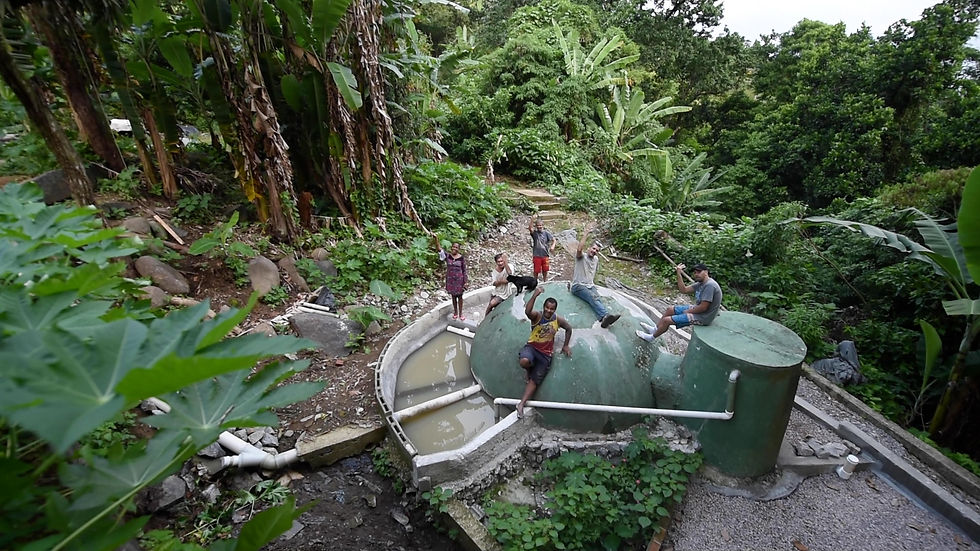
2022 — Bio-system treats sewage in Vale Encantado, Green Roof course in Vila Kennedy and solar power in Caxias.

2023 — Community Land Trust included in Rio’s Master Plan while deepening support in pilot communities.

2024 — 20 favela organizers present energy justice research to Congress, agencies in Brasília and SFN realizes 1st Sustainable Favela Festival.

2025 — CatComm 25th Anniversary, 15 years of RioOnWatch and launch of Favela Climate Memory exhibition.

2026 — First major global advocacy, organizing 30 partners for intense programming at World Urban Forum 'Favela Hub,' weeks after 12-country exchange in Rio.